



Simultaneous Interpreting and Simultaneous Interpreter Services
Experienced simultaneous interpreters who render the speaker’s words into the target language in real time at international conferences, congresses and corporate meetings, complete with booths, headsets and a simultaneous interpreting system.
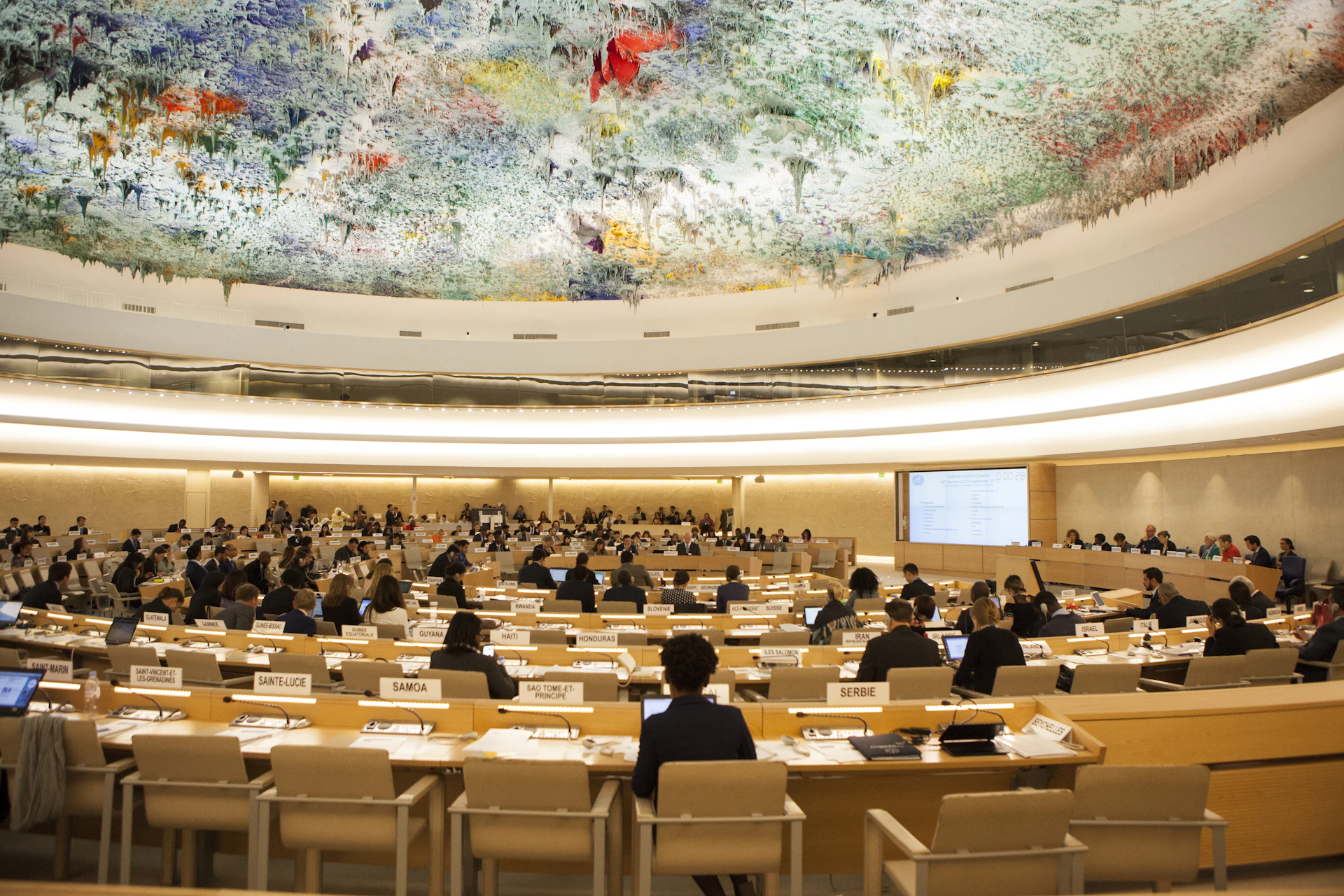
Lingopia is a translation agency founded by conference interpreters, offering 360-degree language services backed by 20 years of industry experience. It takes a multi-layered approach to quality that translates cultures as well as words and anticipates the context and purpose of every speech. Simultaneous interpreting is the professional interpreting service through which we render a speaker’s words into the target language in real time at international conferences, congresses, corporate meetings, seminars and live events. Our experienced simultaneous interpreters convey terminology, context and the speaker’s style accurately, so that participants can follow the discussion without interruption. Working in English, French, German, Russian and many other language pairs, Lingopia provides expert simultaneous interpreters, simultaneous interpreting booths, interpreting headsets and complete simultaneous interpreting system hire across Türkiye, and in Istanbul in particular. We plan the right interpreting team and technical set-up for your conference or meeting with you, and manage the whole process professionally from start to finish.
- Experienced conference interpreters who know your subject
- Booths, headsets and system from the same team
- In person or online (Zoom, Teams, RSI)
- Across Türkiye, especially in Istanbul
Organisations that trust us with simultaneous interpreting













İlhan Erdem
Founder of Lingopia, conference interpreter
To see the experience of our simultaneous interpreters and the projects they work on, take a look at the interpreter profile of our founder, İlhan Erdem.
View interpreter profile
What is simultaneous interpreting?
Simultaneous interpreting, also known as simultaneous translation, is the rendering of a speech into another language by a simultaneous interpreter or conference interpreter at the same time as it is delivered. First used at the Nuremberg Trials after the Second World War, simultaneous interpreting has been increasingly in demand as globalisation has driven growth in international interaction and trade. Today many international institutions, organisations and companies, starting with the United Nations, use simultaneous interpreting services. Conferences and congresses, training courses and seminars, meetings and television broadcasts are where this service, also known as simultaneous translation, is most widely provided. As a relatively young profession, simultaneous interpreting requires advanced training in specific interpreting techniques and methods, as well as a simultaneous interpreting equipment hire service that ensures good sound transmission. Because simultaneous interpreting is both demanding and strenuous, it is not reasonable to expect someone with a natural aptitude for language and communication to interpret simultaneously without any training. AIIC is the leading professional association in the field of simultaneous interpreting.
Simultaneous Interpreting and Its History
To understand how simultaneous interpreting came about, it helps to understand how language itself evolved. Although it is impossible to say exactly when interpreting was first practised, Ancient Egypt is home to the earliest references to interpreters. The first records of interpreting date from the third millennium BC, in the form of an Egyptian relief found in a prince’s tomb that refers to an overseer of interpreters. Other sources from Ancient Egypt show that the activity was mainly linked to public administration.
Interpreters probably came onto the scene when signs and gestures were no longer enough and people needed to communicate with each other in more detail. It is clear that interpreters served in trade, religious services, the armed forces and administration. The Ancient Greeks and Romans also employed interpreters on a regular basis; interpreters played a particularly critical role because the conquerors did not take the trouble to learn the languages of the peoples they had conquered.
When the Paris Peace Conference convened after the First World War, consecutive interpreters were deployed for the first time, as a result of the countries’ wish to use more than one language. Between the two world wars, the emergence of both the League of Nations and the International Labour Organization meant more international meetings and even more languages requiring consecutive interpreting. These services relied on a highly specialised form of shorthand, after which the speech was rendered into the other language; this made meetings unreasonably long and stripped them of any sense of spontaneity.
Colonel Leon Dostert, a former interpreter for General Eisenhower, was tasked with developing a system for simultaneous interpreting. He studied the work of Andrea Kaminker, who had developed his own system for French radio, but with little success. For the Nuremberg Trials of 1945, which were interpreted into English, French, Russian and German, a different system was developed.
Under this system, the interpreters sat close to the defendants in order to render what was being said. The interpreters worked in three teams of twelve: while Team A interpreted for forty-five minutes, Team B sat in the next room, listening in case of any problems while also keeping up with the proceedings. Team C, meanwhile, had a half day off. All interpreting and translation services were directed by Colonel Leon Dostert and Commander Alfred Steer. For each language, six interpreters, twelve translators and nine stenographers worked together. They ensured continuity in the translation, interpreting and transcription services for the trial. As there was no formal course for these services, they developed techniques for complex language tasks despite having had no formal training in simultaneous interpreting techniques or methods. The simultaneous interpreting that emerged from this process allowed the services to be delivered quickly, professionally and accurately; participants wore headsets and could choose between several language channels according to their preference.
Simultaneous interpreting revolutionised the interpreting industry, because it allowed interpreters to convey information much faster and more accurately, and made a genuine exchange of ideas possible from one person to another regardless of the language spoken. This form of interpreting became so popular that in 1947 the United Nations adopted Resolution 152, making simultaneous interpreting a permanent service. As a result, the United Nations provides simultaneous interpreting between each of its six official languages.
The Simultaneous Interpreting Process
Simultaneous interpreters work in an interpreting booth (or with portable interpreting equipment: see our infoport system solution) or use whispered interpreting (chuchotage).
Essentially, three main actions take place:
1) active listening (comprehension)
2) analysis (restructuring the message)
3) delivery (communication)
What sets it apart from consecutive interpreting is that, in simultaneous interpreting, all of this happens at the same time.
Who Performs Simultaneous Interpreting?
Specialists in simultaneous interpreting are known as simultaneous interpreters or conference interpreters. These interpreters, who usually graduate from a four-year degree in translation and interpreting (or translation studies), are selected from around 5–10% of all undergraduates (for example, two students from a class of 30) and receive simultaneous interpreting training in active listening and note-taking strategies.
It is fair to say that those who practise simultaneous interpreting are people with a broad intellectual background. Events where the speakers and participants are professionals involve technical or complex terminology. Just as a professional cannot master the terms and expressions specific to every other discipline, interpreters cannot always be fully at home with every kind of jargon. Nevertheless, interpreters are expected, and indeed required, to learn the exact equivalents of these concepts before the event. To overcome this kind of challenge, interpreters need the curiosity, motivation and discipline to learn these words and concepts. A language professional with these qualities prepares for simultaneous interpreting by practising with a range of texts and videos before the conference. In this respect, a professional interpreter would be wise to turn down an assignment if they lack sufficient experience or terminology preparation.
In short, someone doing simultaneous interpreting is expected to know more words and terms than the average translator. A word such as ‘rosemary’ may well come up in a business meeting, or ‘the Princes’ Islands’ at an industry summit. For this reason, simultaneous interpreters, who must work with a strong vocabulary, also need to develop effective computer skills and crisis management strategies.
How Is Simultaneous Interpreting Done?
Although simultaneous interpreting is regarded as happening in real time, it requires following the speaker at least a few seconds behind, or 1–5 seconds behind with a good memory. The interpreter fully covers one ear with an interpreting headset that meets the technical requirements of the job, and half covers the other in order to hear their own voice. As interpreters must follow the speaker continuously, it is important that they work in a booth with two-way sound insulation or, when interpreting online, in a quiet environment.
Cognitive Load and Working Memory in Simultaneous Interpreting
While listening to the speech, a simultaneous interpreter must analyse its meaning, hold it in short-term memory, reconstruct it in the target language and monitor their own output, all at the same time. Because these processes run in parallel, working memory can quickly become overloaded. A faster speaking pace, dense terminology, numbers, proper names, unfamiliar accents or a lack of context all increase the cognitive load. When this load rises, details can be lost and delays and accuracy problems can arise. That is why interpreters study the subject and terminology before an event, and in the booth use strategies such as noting down numbers and proper names, taking brief notes and sharing tasks with their booth partner. Good sound quality, regular turn-taking and rest breaks also help to manage cognitive load. One of the main reasons simultaneous interpreting calls for expertise is that all these mental processes must be carried out without interruption while the speech continues.
Simultaneous interpreting is an activity in which interpreters can develop their own tactics; some interpreters keep track of the numbers they hear by writing them down. They note the points they want to emphasise. They may also ask the colleague they work with (taking turns every 30 minutes) to keep track of certain numbers and words.
In short, a good simultaneous interpreter has strong intuition, sharpening their ability to anticipate through sentences they have heard thousands of times. Being alert on the job is essential; a good simultaneous interpreter makes sure to get enough sleep and to avoid substances such as alcohol before an assignment. They know that what they convey is more than just words, and they constantly read and watch a variety of material on the fields and cultures they interpret. They reach a certain level of mastery in voice control and stress management.
Interpreters also work in short shifts that demand sustained concentration. The job involves not only rendering words but also conveying elements of communication such as gestures, body language and emotional tone. Equipment such as specialised headsets and microphones helps interpreters do a better job.
Why Is Simultaneous Interpreting Important?
Simultaneous interpreting is widely used in international diplomacy, business, medicine, law and many other fields. This type of interpreting requires the ability to understand and respect cultural differences. Sensitivity to different cultures improves the quality of interpreting and makes communication more effective.
With services such as simultaneous interpreting, language barriers are overcome in real time and effective communication is achieved. Thanks to simultaneous interpreting, participants follow, understand and evaluate what the speaker says as it is being said. The importance of simultaneous interpreting can be summarised as follows:
- Simultaneous interpreting speeds up communication; the service gives participants access to information and ideas without language barriers.
- Simultaneous interpreting saves time; unlike consecutive interpreting, which is sometimes chosen for reasons such as a short meeting but doubles the length of the event, it causes no loss of time in conveying the message.
Is Simultaneous Interpreting Difficult?
Simultaneous interpreting is very demanding and intensive work. For this reason, it usually requires at least two interpreters. Each typically interprets for around 20 to 30 minutes at a time, and these language professionals work a total of six hours a day. Since six uninterrupted hours would reduce performance, a schedule that includes coffee breaks and lunch is essential for interpreters to work effectively.
Online Simultaneous Interpreting Services
At business meetings, press conferences, seminars and training sessions, Lingopia’s simultaneous interpreting and related services ensure your content can reach different audiences anytime, anywhere.
The Era of Online Simultaneous Interpreting
Remote simultaneous interpreting (RSI) is the process of interpreting speech from one language into another in real time, remotely. It is usually delivered through a cloud-based platform. With a good internet connection, you avoid problems such as delays or equipment constraints. As technology has advanced, it has become both possible and more practical for event organisers to use RSI technology to deliver content to wider audiences and in different languages. What is more, because the infrastructure for real-time interpreting can be set up quickly, events can scale considerably while operating costs fall significantly.
The practicality of offering interpreting in real time in an online environment has grown with the development of modern communication technologies. Because interpreters and participants do not need to be in the same physical location, this method offers a number of advantages.
First, online simultaneous interpreting offers greater flexibility, as it is not bound by geography. Interpreters can interpret for speakers or participants from different parts of the world at the same time. This makes it an ideal option for global events and international conferences.
In addition, online simultaneous interpreting is easy to implement, provided the technical infrastructure is in place. Interpreters and participants can easily connect over the internet. This reduces travel costs and makes interpreting services more accessible.
That said, online simultaneous interpreting also has its challenges. Interpreting quality may suffer if the internet connection drops or technical problems occur. It can also be difficult for interpreters to see body language or gestures, which can sometimes complicate communication.
In conclusion, online simultaneous interpreting is a valuable tool that makes communication easier worldwide. However, potential issues such as technical difficulties and connection problems must be taken into account. The method can be improved further as technology continues to develop.
Working Conditions in Simultaneous Interpreting
Every simultaneous interpreter in Türkiye who takes their work seriously is expected to follow certain rules; you can read the working conditions set by the Conference Interpreters Association of Türkiye (TKTD), which represents the profession. Lingopia provides interpreting services in line with both TKTD and AIIC principles. You can also find out more about consecutive interpreting, another form of interpreting.
Simultaneous Interpreting and Technology
Lingopia, Türkiye’s digital translation platform, offers budget-friendly simultaneous interpreting services delivered by qualified interpreters. If you are looking for a professional interpreting agency that speaks your language, you have come to the right place!
Choose the method that suits your needs
Consecutive Interpreting
The speaker pauses, the interpreter renders. For business meetings, small meetings and site visits.
Learn more
Whispered Interpreting
Whispered into the ear of one or two listeners, without disrupting the room.
Learn more
Protocol Interpreting
For high-level visits, signing ceremonies and official receptions.
Learn moreGet a quote for your interpreting needs
Share the date, venue, languages and programme, and we will send you a quote covering the interpreting team and price within minutes.